
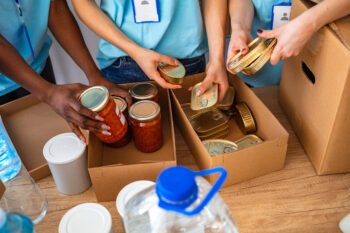
Community food pantries exist to help people get through difficult moments—whether those moments last a week, a season, or longer. If you’ve never visited a pantry before, it’s completely normal to feel unsure about how it works or what will be asked of you.
While every pantry is a little different, most are designed to make the process simple, respectful, and welcoming.
This page walks through what usually happens before, during, and after a visit.
A Welcoming, Judgment-Free Space
Food pantries are built on the understanding that everyone needs help sometimes. Volunteers and staff see people from all walks of life—working families, seniors, students, caregivers, and individuals facing unexpected expenses.
You are not expected to explain your situation or justify why you need food. The focus is on helping, not questioning.
Eligibility and Requirements
Many community food pantries are intentionally low-barrier.
Depending on the pantry, you may encounter:
- No requirements at all
- A simple question about household size
- A request to confirm general residency in an area
- Limits on how often you can visit (such as once a week or once a month)
Most pantries do not require proof of income. Many also do not require identification.
When requirements exist, they are listed in the pantry’s details on this website whenever possible and may be explained again when you arrive.
What Kind of Food You Might Receive
The food available at a pantry depends on donations, deliveries, and partnerships, so it can change from visit to visit.
Common items include:
- Shelf-stable foods like canned goods, pasta, rice, and beans
- Fresh fruits and vegetables
- Bread or baked goods
- Frozen meat or dairy (when refrigeration is available)
- Baby food or formula at some locations
- Basic hygiene items such as soap or toothpaste
Not every pantry offers all of these items, but most aim to provide a mix when possible.
How Food Is Distributed
Pantries use different distribution methods depending on space, volunteers, and demand.
Pre-packed bags or boxes
Food is packed ahead of time and handed out quickly, which helps keep lines moving.
Client-choice pantries
You select items yourself, similar to shopping in a small grocery store. This helps people choose foods that work for their household or dietary needs.
Drive-through or walk-up distributions
Food is distributed outdoors, either to vehicles or at walk-up stations. This is common for scheduled food giveaways or mobile pantries.
The pantry’s listing usually notes which style is used.
How Long a Visit Usually Takes
Most pantry visits are fairly short—often between 10 and 30 minutes.
Timing depends on:
- How many people are visiting
- The type of distribution
- Whether any registration is needed
Some pantries recommend arriving early, especially during busy times, but they generally plan carefully to serve everyone who comes.
Accessibility and Accommodations
Many pantries work to be accessible and inclusive. Some may offer:
- ADA-accessible entrances
- Language assistance or translated materials
- Special hours for seniors or families
- Limited accommodations for dietary needs
If accessibility is a concern, checking the pantry’s details or contacting them ahead of time can help you know what to expect.
Privacy and Confidentiality
Food pantries respect privacy. Any information collected is usually used only to:
- Understand community needs
- Report anonymous statistics to funders
- Improve services
Personal information is not shared publicly.
After Your Visit
You are welcome to return according to the pantry’s schedule and guidelines. Some pantries also share information about:
- Other local food resources
- Meal programs
- Additional assistance in the area
Some people choose to donate or volunteer later when they’re able, but there is no expectation to do so.
Frequently Asked Questions
Will I be judged for using a food pantry?
No. Food pantries exist to help people access food during times of need, and volunteers understand that people come for many different reasons. The goal is to provide support in a respectful and welcoming way.
What happens when I arrive at a food pantry?
Most pantries will ask a few basic questions or direct you where to wait. Depending on the pantry, you may receive a pre-packed bag of food or be invited to select items yourself. Volunteers are usually available to guide you through the process.
How long does a typical pantry visit take?
Many pantry visits take between 10 and 30 minutes. The exact time depends on how many people are visiting, the distribution method, and whether any registration is required.
Do I need to bring paperwork or identification?
Many community food pantries do not require identification or paperwork. When requirements exist, they are usually minimal and are listed in the pantry’s details whenever available.
Can I visit a food pantry more than once?
Yes. Most food pantries allow repeat visits, though some may have guidelines on how often you can come. These limits are typically based on food supply and demand.